Bookkeeping for Canadian Small Businesses: Getting It Right from the Start
- robertaccounting
- 2 days ago
- 8 min read

Updated: 2 hours ago
Many small businesses do not run into trouble because sales are weak. They run into trouble because the owner finds out too late where the money went.
A bank balance can look healthy while the business is losing money. Sales can rise while cash gets tighter. A busy year can still end with missing receipts, unclear credit card charges, and a stressful scramble before tax filing.
Bookkeeping is not only a year-end task. Done well, it shows income, costs, expenses, receivables, payables, GST/HST, and cash flow while there is still time to act. It also makes CRA questions, loan applications, and tax preparation much easier.
This article is general information for Canadian small businesses and self-employed owners. It is not tax, legal, or accounting advice. For specific decisions, speak with a CPA or qualified tax professional.

Bookkeeping and tax filing are different jobs
Bookkeeping is the ongoing process of recording and organizing the financial activity of a business. It covers sales, expenses, accounts receivable, accounts payable, loans, asset purchases, payroll, sales tax, and bank transactions.
In plain terms, bookkeeping answers questions such as:
How much did the business earn?
Where did the money go?
Which customers have not paid yet?
Which bills are coming due?
How much GST/HST needs to be set aside?
Which expenses have receipts or invoices to support them?
Tax filing is different. It uses the books, tax rules, and supporting documents to calculate taxable income, prepare returns, and report to the Canada Revenue Agency.
A CPA can help with tax planning, financial statements, and complex issues. But that work depends on the quality of the daily records. If a full year of transactions gets dumped into a folder at year-end, the first job is not tax planning. It is cleanup.
That cleanup can cost more than regular bookkeeping. It can also lead to weaker decisions because missing details limit what a professional can confirm.
Waiting until year-end creates avoidable problems
Waiting until tax season can feel easier during a busy year. In practice, it often creates more work.
Owners may need to remember what a payment from six months ago was for. A charge could be materials, software, a shareholder loan, a personal purchase, or a contractor payment. Without notes and receipts, the answer may not be clear.
Tax filing needs accurate income and expenses
Corporate and self-employed tax reporting does not depend on what is left in the bank account. The business needs to identify revenue, cost of goods sold, and operating expenses for the year.
Messy books create two common risks:
Income may be missed, which can create CRA risk.
Legitimate expenses may be missed, which can increase tax unnecessarily.
Good bookkeeping gives the accountant better information and gives the owner more confidence.
Higher sales do not always mean higher profit
Many owners watch sales first. That makes sense, but it is only part of the picture.
Materials, platform fees, payment processing fees, advertising, labour, rent, software, shipping, and returns can all rise at the same time. A store may sell more while keeping less.
A monthly profit and loss statement can show whether growth is actually profitable. For example, an online shop may see revenue go up, but higher return rates, warehouse costs, and paid ads may erase the gain.
Profit and cash flow are not the same
A business can show profit and still struggle to pay bills.
This happens when customers have not paid yet, but payroll, rent, supplier invoices, loan payments, and GST/HST are due. Bookkeeping helps track accounts receivable and accounts payable, so cash needs are visible before the due date arrives.
Clear books do not solve every cash problem, but they show the problem early enough to do something about it.
CRA questions are easier to answer
CRA may ask for invoices, receipts, contracts, bank statements, payment records, and explanations for transactions. If documents are saved by month and category, the response is much easier.
If records are spread across inboxes, drawers, personal credit cards, bank portals, and supplier platforms, the work becomes slow and error-prone. Sales records, card deposits, invoices, and bank activity should be able to line up with each other.
Set up the basics before the business gets busy
Good bookkeeping does not need to be complicated. It does need a repeatable process. These steps fit many small Canadian businesses and sole proprietors.

Separate business and personal accounts
Business income and expenses should run through separate business bank accounts and business credit cards where possible.
Avoid using a personal account for regular business deposits. Avoid mixing many personal purchases into the business account. Separation makes reconciliation, expense coding, and tax preparation much cleaner.
For incorporated businesses, this is even more important. Money moving between the shareholder and the corporation needs clear treatment. If a shareholder takes money out, pays a company bill personally, or lends money to the company, record it properly. Do not casually treat those amounts as income or expenses.
Choose a bookkeeping system that matches the business
A very small sole proprietorship with few transactions may be able to start with a well-designed spreadsheet. At minimum, it should track:
Date
Customer or supplier
Amount
GST/HST amount, if applicable
Payment account
Income or expense category
Receipt or invoice location
Short description of the transaction
As the business grows, accounting software often becomes a better choice. In Canada, common options include QuickBooks Online, Xero, and Wave.
Software becomes more useful when the business has:
GST/HST to collect or report
Payroll or contractor payments
Inventory
More than one bank account or credit card
Customer invoices and unpaid balances
Supplier bills and due dates
Multi-currency sales or purchases
When comparing tools, do not look only at price. Check bank connections, invoice tools, sales tax setup, payroll features, inventory handling, reporting, and whether your CPA can access and adjust the books easily.
Option | Best fit | Watch for |
Spreadsheet | Very low transaction volume | Easy to make formula or classification errors |
QuickBooks Online | Many small businesses that need invoicing, bank feeds, and reports | Setup matters, especially sales tax and chart of accounts |
Xero | Businesses that want strong online accounting features | Payroll and add-ons may need review |
Wave | Very small businesses and simple records | May not fit more complex inventory, payroll, or reporting needs |
Decide between cash and accrual tracking
Cash basis records transactions when money is received or paid. Accrual basis records income when earned and expenses when incurred, even if cash has not moved yet.
Method | When the transaction is recorded | Simple example |
Cash basis | When payment is received or made | A customer pays in April, so income is recorded in April |
Accrual basis | When income is earned or the expense occurs | An invoice is issued in March, so income is recorded in March |
The right method can depend on the business structure, reporting needs, and tax situation. Many owners also use bookkeeping software to track receivables and payables even when tax reporting rules need separate review. Ask a CPA which method fits before building habits that are hard to change.
Build a monthly bookkeeping routine
Bookkeeping works best when it has a rhythm. A short monthly routine is usually better than one large year-end cleanup.
Record sales and match deposits
Sales should connect to the money that reaches the bank.
For a service business, that may mean matching invoices to customer payments. For a retailer or restaurant, it may mean matching point-of-sale reports to card deposits, cash deposits, refunds, and fees.
Payment processors often deduct fees before depositing funds. If the software records only the net deposit, revenue and fees may be understated. The books should show gross sales, refunds, processing fees, and net deposits clearly.
Save receipts and invoices as you go
Every business expense should have support. A bank or credit card line shows that money moved, but it does not always prove what was purchased or why it was business-related.
Keep digital copies of:
Supplier invoices
Receipts
Customer invoices
Contracts and engagement letters
Bank and credit card statements
Lease agreements
Loan documents
Payroll records
Sales tax filings and working papers
CRA generally requires businesses to keep records for at least six years from the end of the last tax year they relate to. Some situations may require longer retention, so confirm the rule for your business.
A simple folder structure can work well:
`2026 > 01 January > Receipts`
`2026 > 01 January > Bank statements`
`2026 > 01 January > Sales reports`
Use file names that explain the document, such as `2026-01-18 SupplierName Materials 245.00.pdf`.

Reconcile bank and credit card accounts
Bank reconciliation means comparing the bookkeeping records to the bank and credit card statements.
This step catches duplicate entries, missing transactions, bank fees, payment processor deposits, refunds, and personal charges. It is one of the most important habits in bookkeeping.
Do this for every account used by the business:
Chequing accounts
Savings accounts
Business credit cards
Lines of credit
Payment platforms
Loan accounts
If the software balance does not match the statement balance, find the reason instead of forcing an adjustment you do not understand.
Track GST/HST separately from income
GST/HST collected is not extra revenue. It is money collected on behalf of the government, less eligible input tax credits.
A business registered for GST/HST needs to know:
GST/HST collected on sales
GST/HST paid on eligible business expenses
Net amount payable or refundable
Filing period and due date
Set aside GST/HST during the year. If it sits in the operating account, it can be easy to spend by accident.
Sales tax rules can vary by province, type of supply, customer location, and business activity. If sales cross provinces or include exempt, zero-rated, or digital services, get advice before relying on default software settings.
Review monthly reports before making decisions
At month-end, look at the basic reports:
Profit and loss statement
Balance sheet
Accounts receivable aging
Accounts payable aging
Sales tax summary
Cash flow report, if available
The goal is not to become an accountant. The goal is to spot signals early.
Are margins shrinking? Are certain customers paying late? Are expenses rising faster than sales? Is GST/HST being saved? Is the owner drawing more cash than the business can support?
This is where How Canadian Small Businesses Can Do Bookkeeping Right from the Start becomes practical. The value is not in perfect labels. The value is in seeing the business clearly enough to make better choices.
Know when to bring in a professional
Many owners can handle basic bookkeeping at the start. There is also a point where professional help saves money, reduces risk, and frees up time.
Consider involving a bookkeeper, CPA, or tax professional when:
The business registers for GST/HST
Payroll starts
Contractors need proper tracking
Inventory becomes material
The business incorporates
There are shareholder loans or owner withdrawals
The business buys vehicles, equipment, or other major assets
There are multiple provinces or currencies involved
CRA sends a request or review letter
The books are months behind
The owner does not understand the financial reports
A bookkeeper can keep records current and reconcile accounts. A CPA can advise on structure, tax planning, financial statements, and complex filings. In many cases, the best setup is both. The bookkeeper keeps the books clean during the year, and the CPA reviews and advises before filing.
Do not wait until the records are a mess. A short setup session early can prevent months of cleanup later.
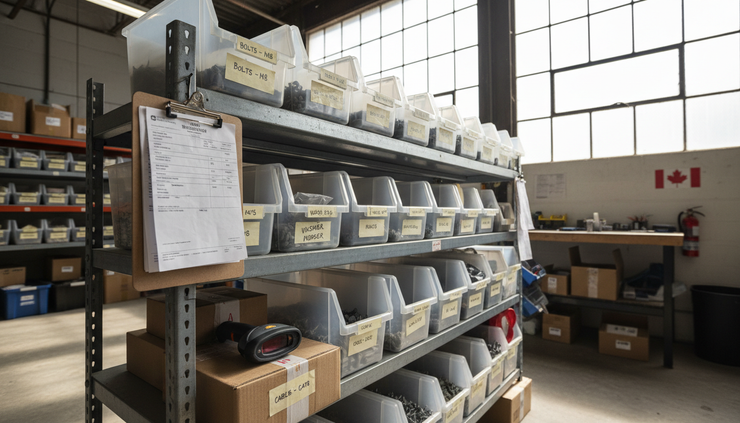
A practical bookkeeping checklist
Use this as a simple monthly checklist:
Keep business and personal accounts separate.
Enter or import all bank and credit card transactions.
Save receipts and invoices in monthly folders.
Match sales reports to deposits.
Record payment processor fees separately.
Reconcile every bank and credit card account.
Review unpaid customer invoices.
Review unpaid supplier bills.
Check GST/HST collected and paid.
Run a profit and loss statement.
Back up key records.
Ask questions while transactions are still fresh.
If bookkeeping has already fallen behind, do not try to fix everything in one sitting. Start with the bank and credit card statements. Rebuild month by month. Separate unknown items into a review list, then resolve them with receipts, emails, supplier portals, and notes.
Clean books are built from small habits. Each receipt saved, invoice matched, and account reconciled makes the next decision easier.
A business does not need perfect bookkeeping on day one. It needs a clear system, used consistently. Once the numbers are reliable, the owner can stop guessing and start managing with facts.



Comments